


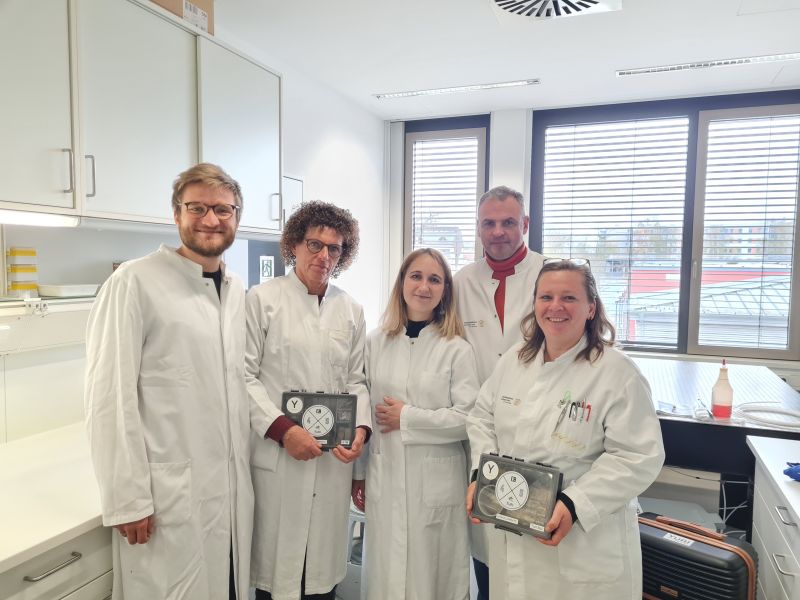
Meet Prof. Nils Cordes's team of 𝗜𝗟𝗟𝗨𝗠𝗜𝗡𝗔𝗧𝗘, one of eight research groups flying on our two upcoming Cellbox-45 missions. 🚀🚀
Prof. Nils Cordes’ research group at OncoRay - National Center for Radiation Research in Oncology is investigating how microgravity and cosmic radiation and the associated potential DNA damage affect the function of mouse liver organoids. The focus is on changes in the extracellular matrix - the protein network that provides structural support to cells as well as epigenetic and transcriptomic processes.
A central, innovative component of the project is the first-ever use of ATAC sequencing in space. This method makes it possible to identify those regions of the genome that are accessible and thus potentially active, or closed and thus potentially inactive, under conditions of weightlessness and cosmic radiation.
The goal is to gain a precise understanding of how quickly tissue changes in space and, for the first time, to identify the epigenetic-transcriptional mechanisms underlying these adaptation processes. The project is being conducted in collaboration with Prof. Meritxell Huch from MPI-CBG - Max Planck Institute of Molecular Cell Biology and Genetics in Dresden, who is providing the liver organoids. The bioinformatic analyses are supported by the DRESDEN-concept Genome Center at Technische Universität Dresden. Experiments in simulated microgravity are being conducted in cooperation with Dr. Francesco Pampaloni at Goethe-Universität Frankfurt and Dr. Christian Liemersdorf at the DLR Institute of Aerospace Medicine.
We wish the best to the team for the test campaign and preparation for the launch.
Deutsches Zentrum für Luft-und Raumfahrt e.V. Deutsche Raumfahrtagentur im DLR Michael Becker
#SpaceBiology #LifeSciences #Cellbox #Microgravity #Space #Dresden
#MicrogravityResearch #ISSResearch #NewSpace #SpaceBiotech #DLR