


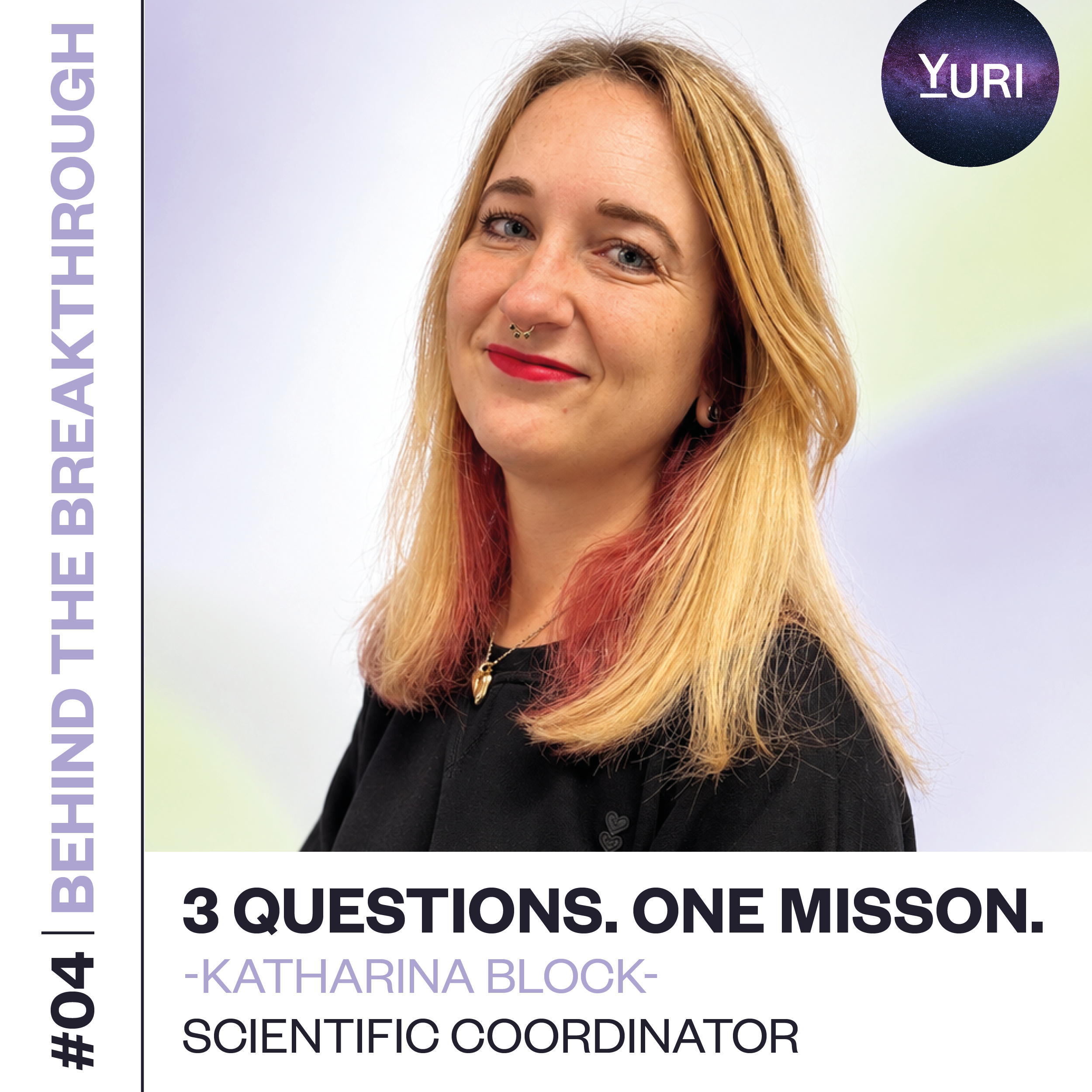
#04 Katharina Block - Scientific Coordinator
𝗕𝗘𝗛𝗜𝗡𝗗 𝗧𝗛𝗘 𝗕𝗥𝗘𝗔𝗞𝗧𝗛𝗥𝗢𝗨𝗚𝗛 - 3 questions. One perspective. Zero gravity.
Not every research question benefits from microgravity. Katharina helps scientists identify its potential and turn biological hypotheses into feasible space experiments.
We asked her three questions. 👇
💬𝟬𝟭 | 𝗪𝗵𝗮𝘁 𝗺𝗮𝗸𝗲𝘀 𝗮 𝘀𝗰𝗶𝗲𝗻𝘁𝗶𝗳𝗶𝗰 𝗾𝘂𝗲𝘀𝘁𝗶𝗼𝗻 𝗽𝗮𝗿𝘁𝗶𝗰𝘂𝗹𝗮𝗿𝗹𝘆 𝘀𝘂𝗶𝘁𝗮𝗯𝗹𝗲 𝗳𝗼𝗿 𝗶𝗻𝘃𝗲𝘀𝘁𝗶𝗴𝗮𝘁𝗶𝗻𝗴 𝗶𝗻 𝗺𝗶𝗰𝗿𝗼𝗴𝗿𝗮𝘃𝗶𝘁𝘆?
There isn't necessarily one particular type of scientific question that is best suited for microgravity. It can be relevant across many different fields of biology, from cell and tissue behaviour to protein crystallisation, plant biology or microorganisms. What makes microgravity particularly interesting is that gravity is such a constant part of life on Earth that we often don't consider its influence on a process until we change it. By reducing gravity, we can uncover effects that may normally be masked or difficult to study, and gain a better understanding of which mechanisms are actually gravity-dependent. So sometimes the most interesting result is not simply what changes in microgravity, but discovering that gravity was influencing a process in the first place.
💬𝟬𝟮 | 𝗛𝗼𝘄 𝗱𝗼 𝘆𝗼𝘂 𝘁𝗿𝗮𝗻𝘀𝗹𝗮𝘁𝗲 𝗮 𝗯𝗶𝗼𝗹𝗼𝗴𝗶𝗰𝗮𝗹 𝗵𝘆𝗽𝗼𝘁𝗵𝗲𝘀𝗶𝘀 𝗶𝗻𝘁𝗼 𝗮𝗻 𝗲𝘅𝗽𝗲𝗿𝗶𝗺𝗲𝗻𝘁 𝘁𝗵𝗮𝘁 𝗰𝗮𝗻 𝗮𝗰𝘁𝘂𝗮𝗹𝗹𝘆 𝗯𝗲 𝗲𝘅𝗲𝗰𝘂𝘁𝗲𝗱 𝗶𝗻𝘀𝗶𝗱𝗲 𝗮 𝘀𝗽𝗮𝗰𝗲-𝗯𝗮𝘀𝗲𝗱 𝗹𝗮𝗯𝗼𝗿𝗮𝘁𝗼𝗿𝘆?
For me, it starts with a conversation. What does the scientist actually want to find out, and what does the experiment need to answer? From there, we work backwards and figure out what the experiment needs in practice, how the samples need to be handled, what temperature and timing they require, when fluids need to be exchanged, or how samples need to be fixed so they can be analysed afterwards.
Then comes the interesting part. Making all of that work within the constraints of a space mission. I act as a bridge between the scientists and our engineering teams, helping turn a biological idea into something that can actually be built, tested, launched and operated in space.
💬𝟬𝟯 | 𝗪𝗵𝗲𝗿𝗲 𝗰𝗮𝗻 𝗦𝗰𝗶𝗲𝗻𝗰𝗲-𝗮𝘀-𝗮-𝗦𝗲𝗿𝘃𝗶𝗰𝗲 𝗺𝗮𝗸𝗲 𝘁𝗵𝗲 𝗯𝗶𝗴𝗴𝗲𝘀𝘁 𝗱𝗶𝗳𝗳𝗲𝗿𝗲𝗻𝗰𝗲 𝗳𝗼𝗿 𝗿𝗲𝘀𝗲𝗮𝗿𝗰𝗵𝗲𝗿𝘀 𝘄𝗵𝗼 𝗵𝗮𝘃𝗲 𝘀𝘁𝗿𝗼𝗻𝗴 𝗯𝗶𝗼𝗹𝗼𝗴𝘆 𝗲𝘅𝗽𝗲𝗿𝘁𝗶𝘀𝗲 𝗯𝘂𝘁 𝗻𝗼 𝗽𝗿𝗲𝘃𝗶𝗼𝘂𝘀 𝘀𝗽𝗮𝗰𝗲 𝗲𝘅𝗽𝗲𝗿𝗶𝗲𝗻𝗰𝗲?
Space experiments come with a lot of additional complexity that researchers don't normally have to deal with on Earth. From hardware constraints and safety requirements to launch timelines, mission operations and dealing with unexpected situations. Science-as-a-Service can take much of that complexity off the researchers shoulders. They can focus on their scientific question and experimental design, while we help translate it into an experiment that can actually fly and be operated in space.